


Stainless Steel – Grade 431 (UNS S43100)
Grade Specification Comparison
Grade specifications of grade 431 stainless steels
| Grade | UNS No | Old British | Euronorm | Swedish SS | Japanese JIS | ||
| BS | En | No | Name | ||||
| 431 | S43100 | 431S29 | 57 | 1.4057 | X17CrNi16-2 | 2321 | SUS 431 |
Possible Alternative Grades
| Grade | Why it might be chosen instead of 431 |
| 410 | Only a lower hardened strength is needed. |
| 416 | High machinability is required, and the lower hardened strength and lower corrosion resistance of 416 is acceptable. |
Introduction
Grade 431 stainless steels are martensitic, heat-treatable grades with excellent corrosion resistance, torque strength, high toughness and tensile properties. All these properties make them ideal for bolt and shaft applications. These steels, however, cannot be cold-worked owing to their high yield strength, hence they are suitable for operations such as spinning, deep drawing, bending or cold heading.
Fabrication of martensitic steels is generally carried out using techniques that allow hardening and tempering treatments and poor weldability. The corrosion resistance properties of grade 431 steels are lower than that of austenitic grades. The operations of grade 431 are limited by their loss of strength at high temperatures, due to over-tempering, and loss of ductility at negative temperatures.
| Colour Code | Stocked Sizes | |
| ORANGE (Bar end) |
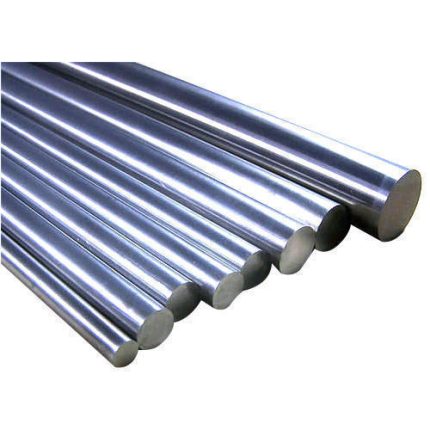
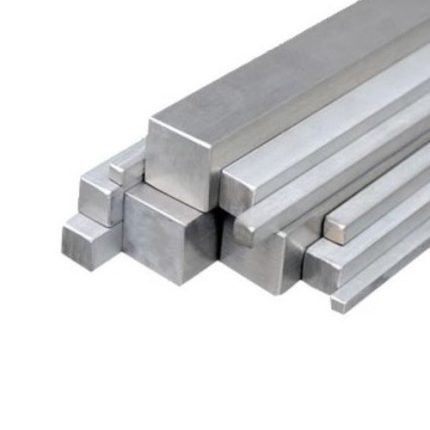
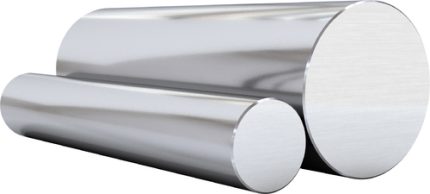
Stocked Sizes | 15 to 400 mm diameter. |
| Bar Finish | ||
| Cold Drawn , Miled and Polished, Matt. | ||
| Related Specifications | |
| Australia | AS 2837-1986 431 |
| Germany | W.Nr 1.4057 X20CrNi17 2 |
| Great Britain | BS970 Part3 1991 431S29 BS970 – 1955 EN57 |
| Japan | JIS G4303 SuS 431 |
| USA | ASTM A276-98b 431 SAE 51431 AISI 431 UNS S43100 |
Specifications
The following specifications cover Stainless Steel 431
- AISI 431
- AMS 5628
- ASTM A276
- ASTM A473
- ASTM A493
- ASTM A511
- ASTM A579
- ASTM A580
- DIN 1.4057
- MIL S-18732
- MIL S-8967
- UNS S43100
Key Properties
The specified properties are for bar products in ASTM A276. The properties may not be necessarily similar to other forms such as forgings and plates.
Principal Design Features
431 is a martensitic stainless combining excellent impact strength at high hardness levels with the best corrosion resistance of any martensitic stainless steels.
Composition
Table 1. Composition ranges of grade 431 stainless steels
| Grade | C | Mn | Si | P | S | Cr | Ni | |
| 431 | min.
max. |
–
0.20 |
–
1 |
–
1 |
–
0.04 |
–
0.03 |
15
17 |
1.25
2.50 |
Mechanical Properties
Table 2. Mechanical properties of grade 431 stainless steels
| Tempering Temperature (°C) | Tensile Strength (MPa) | Yield Strength 0.2% Proof (MPa) | Elongation (% in 50mm) | Hardness Brinell (HB) | Impact Charpy V (J) |
| Annealed * | 862 | 655 | 20 | 285 max | – |
| 204 | 1345 | 1055 | 20 | 388 | 50 |
| 316 | 1295 | 1035 | 19 | 375 | 53 |
| 427 | 1350 | 1080 | 19 | 388 | # |
| 538 | 1140 | 965 | 19 | 321 | # |
| 593 | 1015 | 770 | 20 | 293 | 64 |
| 650 | 960 | 695 | 20 | 277 | 84 |
Grade 431 is frequently stocked and supplied in “Condition T”, with specified tensile strength of 850 – 1000MPa.
* Annealed tensile properties are typical for Condition A of ASTM A276; annealed hardness is the specified maximum. Grade 431 is only rarely stocked in annealed Condition A.
# Grade 431 should not be tempered between 425 and 600°C, due to the low impact resistance associated with this temperature range.
Physical Properties
Table 3. Typical physical properties of grade 431 stainless steels
| Grade | Density (kg/m3) | Elastic Modulus (GPa) | Mean Coefficient of Thermal Expansion (μm/m/°C) | Thermal Conductivity (W/m.K) | Specific Heat 0-100°C (J/kg.K) |
Electrical Resistivity (nΩ.m) | ||||||
| 0-100°C | 0-315°C | 0-538°C | at 100°C | at 500°C | ||||||||
| 431 | 7800 | 200 | 10.2 | 12.1 | – | 20.2 | – | 460 | 720 | |||
| Mechanical Property Requirements For Material in the Annealed and Heat Treated – Condition T To AS2837 – 1986 431 and BS970 Part3 1991 431S29 | ||||||||||||
| Condition | Annealed | *T | ||||||||||
| Tensile Strength Mpa | Min | 850 | ||||||||||
| Max | 1000 | |||||||||||
| 0.2% Yield Strength Mpa | Min | 635 | ||||||||||
| Elongation on 5.65√S0 % | Min | 11 | ||||||||||
| Izod Impact Valua J mm | Min | 63 34 63 20 |
||||||||||
| Hardness HB | Min | 248 | ||||||||||
| Max | 277 | 302 | ||||||||||
| *Material stocked generally in condition T. NB. Check the mill certificate if critical for end use. |
||||||||||||
| Typical Mechanical Properties At Room Temperature – *Hardened and Tempered to Condition T | ||||||||||||
| Tensile Strength Mpa | 940 | |||||||||||
| 0.2% Yield Strength Mpa | 750 | |||||||||||
| Elongation in 50mm % | 19 | |||||||||||
| Impact Izod J | 65 | |||||||||||
| Hardness | HB | 280 | ||||||||||
| Rc | 30 | |||||||||||
| *Typical Hardening Temperatures | 980oC – 1020oC | |||||||||||
| *Typical Tempering Temperatures | 640oC – 660oC | |||||||||||
| 590oC – 610oC | ||||||||||||
| Typical Mechanical Properties At Room Temperature – Hardened By Oil Quench at 980oC and Tempered as Indicated | ||||||||||||
| Tempering Temperature oC | 250 | 370 | 480 | 590 | 650 | |||||||
| Tensile Strengt Mpa | 1370 | 1390 | 1410 | 980 | 920 | |||||||
| 0.2% Yield Strength Mpa | 1030 | 1130 | 1200 | 790 | 690 | |||||||
| Elongation in 50mm % | 16 | 16 | 16 | 19 | 20 | |||||||
| Impact Charpy J | 54 | *34 | *16 | 65 | 70 | |||||||
| Hardness | HB | 410 | 420 | 425 | 295 | 270 | ||||||
| Rc | 44 | 45 | 46 | 32 | 29 | |||||||
| High tensile strength and high yield strength with slightly lower impact properties when tempered below 370oC. Section Size 30mm *Note drop in impact properties.Tempering within the range 370oC – 565oC should be avoided. |
||||||||||||
| Elevated Temperature Properties | ||||||||||||
| 431 displays good resistance to scaling in continuous service up to 700oC. Its use however at these higher working temperatures results in a substantial drop in tensile strength and hardness, with subsequent increase in ductility. | ||||||||||||
| Typical Mechanical Properties at Elevated Temperatures, Hardened at 1010oC and Tempered at 30oC Above Working Temperature | ||||||||||||
| Tempering Temperature oC | 510 | 570 | 620 | |||||||||
| Working Temperature oC | 480 | 540 | 590 | |||||||||
| Tensile Strengt Mpa | 1350 | 720 | 435 | |||||||||
| Elongation in 50mm % | 15 | 20 | 26 | |||||||||
| Room Temperature Hardness after Test | HB | 440 | 330 | 280 | ||||||||
| Rc | 47 | 37 | 30 | |||||||||
| NB. Creep and stress rupture strength is also substantially reduced at these higher working temperatures. | ||||||||||||
| Low Temperature Properties | ||||||||||||
| 431 is not recommended for use at sub-zero temperatures due to a substantial drop in impact properties consistent with most steels other than the austenitic steel types. | ||||||||||||
| Cold Bending | ||||||||||||
| In the hardened and tempered as supplied condition will be extremely difficult due to the high yield strength and is not generally recommended. | ||||||||||||
| Hot Bending | ||||||||||||
| In the hardened and tempered as supplied condition it is not recommended due to its affect on the mechanical properties within the heat affected zone. | ||||||||||||
| Corrosion Resistance | ||||||||||||
| 431 has the highest corrosion resistance of all the Martensitic stainless steels, and while not as high as the austenitic stainless steels it is in certain corrosive environments similar to that of 301 and 302 grades.NB. It has optimum corrosion resistance in all environments in the hardened and tempered condition, and is not therefore recommended for use in the annealed condition. It is most important that oxygen is always allowed to circulate freely on all stainless steel surfaces to ensure that a chrome oxide film is always present to protect it. If this is not the case, rusting will occur as with other types of non stainless steels.For optimum corrosion resistance surfaces must be free of scale and foreign particles. Finished parts should be passivated. |
||||||||||||
Hot Working
Heat to 2100-2200 F (1149-1204 C) for best results. Do not work material below 1650 F (900 C).
Cold Working
This alloy is easily drawn, spun, headed, sheared and bent compared with other stainless steels.
Forging
Heat uniformly to 1150oC – 1200oC, hold until temperature is uniform throughout the section. Do not soak but commence forging immediately.Do not overheat as this will cause a loss of toughness and ductility. Do not forge below 900oCFinished forgings should be cooled as slowly as possible in dry lime or ashes to room temperature and sub-critical annealed immediately
Heat Treatment
Sub-Critical Annealing
Heat uniformerly to 620oC – 660oC hold until temperature is uniform throughout the section.
*Soak as required – suggested time 6 to 12 hours but can be longer, cool in air.
Annealing
Heat to 950oC – 1020oC, hold until temperature is uniform throughout the section. *Soak as required.
Quench in oil or air cool. Temper immediately while still hand warm.Note: Best impact properties achieved by hardening from above 1020oC. Best corrosion resistance plus mechanical properties achieved by hardening from about 980oC and tempering above 590oC.
Grade 431 steels are heated to 620 to 660°C and then air-cooled.Grade 431 steels are generally hardened by heating at temperatures from 980 to 1065°C, holding for nearly ½ h, followed by oil or air quenching. Complex or hardened parts of grade 431 steels can be pre-heated to temperatures from 760 to 790°C and tempered, to improve their mechanical properties. Tempering of these steels at 425 to 600°C should be avoided, owing to the loss of impact toughness at this temperature range.
Hardening
Heat to 950oC – 1020oC, hold until temperature is uniform throughout the section. *Soak as required.Quench in oil or air cool. Temper immediately while still hand warm. Note: Hardening from 1020oC – 1060oC will give optimum corrosion resistance, but hardening from about 980oC will give the best combination of corrosion resistance and mechanical properties.
1800-1950 F (982-1066 C), oil quench or ail cool for maximum properties.
Nitriding
Prior to nitriding, the chrome oxide film which protects the surface must be broken down by pickling or fine sand blasting.Nitriding is carried out at 500oC – 550oC followed by slow cooling (no quench) reducing the problem of distortion. Parts can therefore be machined to near final size, leaving a grinding tolerance only. Always ensure that the tempering temperature employed during the initial heat treatment was higher than the nitriding temperature otherwise the core strength will be affected.
Tempering (Condition T)
Heat to 590oC – 680oC as required hold until temperature is uniform throughout the section, soak as required, cool in air. Temper for desired properties. Temperatures between 700-1050 F (371-565 C) will adversely affect impact strength and corrosion properties.
A Double Tempering Treatment,as follows is recommended for optimum toughness.
Heat to 640oC – 680oC. *Soak as required, cool in air.
Followed by:
Re heat to 590oC – 610oC. *Soak as required, cool in air.431 can of course be tempered at much lower temperatures producing much higher tensile strengths with subsequent lower impact properties. NB. Tempering however within the range 370oC – 565oC should be avoided due to temper brittleness, resulting in a considerable reduction in impact properties and loss of corrosion resistance.*Heating temperatures, rate of heating, cooling and soaking times will vary due to factors such as work piece size/shape, also furnace type employed, quenching medium and work piece transfer facilities etc.Please consult your heat treater for best results.
Machining
431 machines best in the hardened and tempered as supplied condition and is regarded as being readily machineable with all operations such as turning and drilling etc. capable of being carried out satisfactorily. It does not work harden to the same extent as the 300 series austenitic stainless steels, but is more similar in this respect to the low alloy high tensile steels such as 4140 etc.Allowing therefore for its high tensile properties, all machining should be carried out as per machine manufacturers recommendations for suitable tool type, feeds and speeds.
Grade 431 steels can be easily machined in their annealed state. However, it is extremely difficult to machine these steels if they are hardened above 30HRC.
In the fully annealed condition, 431 will gall and build up on the tools. Good surface finishes are not easily obtained.
Welding
431 is not generally recommended for welding in either the annealed or hardened and tempered condition, due to its air hardening capability which can lead to the formation of brittle martensite, resulting in cold cracking due to contraction stresses within the weld and heat affected zone. The higher the carbon content the higher the hardening capability and the greater the risk of cracking.Pre heating and interpass temperature control during welding, plus very slow cooling and post-weld annealing is the best method to prevent cracking. The following welding procedure and post-weld heat treatment may be taken as a guide only if welding is necessary.
Welding of grade 431 stainless steels is difficult due to the chances of cracking. It is recommended to pre-heat the materials to 200 – 300°C before welding, and carry out post-weld heat treatment at 650°C. Welding can be performed using grade 410 filler rods, but ductile welds can be achieved using grades 308L, 309 or 310 steels.Most electric welding procedures have proven successful with 431 stainless.
Filler metal should be AWS E/ER410.To avoid cracking, pre-heat the workpiece to 400-600 F (204-316 C). After air cooling, treat at 1200 F (649 C) to reattain maximum properties.
Welding Procedure
Welding electrodes or rods should be low hydrogen types 410 or *similar when good strength is required otherwise an austenitic stainless electrode or rod such as 308 or *similar may be used resulting in a more ductile weld when strength is not so critical and post-weld annealing is not possible or intended.Pre-heat at 200oC – 300oC and maintain interpass temperature at 200oC minimum. On completion of welding cool slowly as possible until hand warm if possible: Post-weld sub-critical anneal at 620oC – 660oC, and cool in air.*Please consult your welding consumables supplier.
Applications
Typical applications of grade 431 stainless steels include the following:
- Laboratory equipment
- Marine systems
- Beater bars
- Pump and propeller shafts
- Nuts and bolts



Reviews
There are no reviews yet.